

Racing - Getting Started
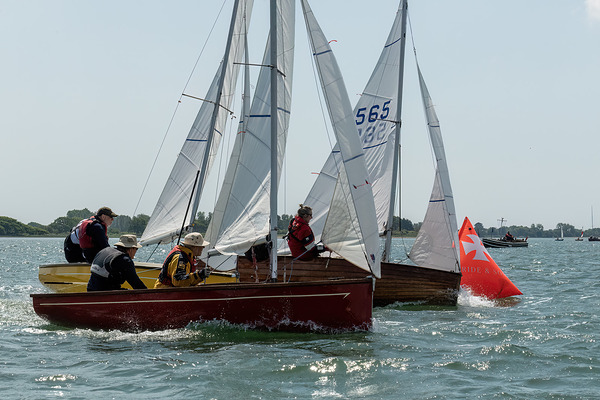
Racing can be quite intimidating for beginners, but it is the heart of club activities. As soon as you feel confident handling a dinghy, its time to go racing. You need to feel confident about your personal sailing ability, because you are responsible for yourself, your crew and your boat. If you need to gain more confidence, then consider some of the training courses offered by the Club, especially Start Racing. It may be possible to crew for a more experienced helm or even persuade a more experienced helm to crew for you in your boat. Use the 'Crew Finder' option in the website. Each event also has a Crew-finder facility. The Class Captains are always open to a conversation and can guide you in the right direction. You can also learn a lot about racing by volunteering for a race duty - either in the race team or on a patrol boat. This gets you close to the action. No experience is needed for many roles.
The Notice of Race (NoR), Sailing Instructions (SI) and Calendar will get you started in the right direction, and here are a few pointers to help get you up to speed:
- Allow sufficient time to rig, launch and get to the start line. Many of our races start right at the quay, but often we do sail right out into the main channel to start and race.
- Understand and apply the rules. When meeting other boats in the harbour and beyond, and there is a risk of collision, you will need to apply the International Regulations for Preventing Collisions at Sea (IRPCS) or ColRegs. There is a handy guide from the Harbour Conservancy to download below. If you are racing then you'll need to apply the Racing Rules of Sailing (RRS). As with all rulebooks, this can get quite complicated, but try to understand the basics and importance of applying the rules and taking exoneration penalties. There's a simplified version produced by the RYA called the 'Handy Guide to the Racing Rules.' The Club runs shore-based training covering Racing Rules.
- Learn the starting sequence and key flags. It is helpful to know at least your class flag and the preparatory flag but also other important communication made by use of flags and sound signals. Many racers have a guide to these flags and sound signals on their boat. We also have a start light system used for some starts in addition to flags. Details in the SI.
- Get an easily operated and easy-to-read, waterproof countdown watch - then you'll be able to make well-timed starts.
- Know the course that you are intending to race, including how the course is displayed, the mark letters, direction of rounding and location. Equip yourself with a BSC Course Card - clear- laminated, moderately waterproof copies are available from the Office. It's a good idea to keep one on the boat (maybe another item to tape to the boat) and to have another with your gear for handy reference. Then, when you're in the lead, you will know where to go, without relying on following others to the next mark!
- Finally, don't forget to sign-on the race sheets in the clubhouse before going afloat, and sign-off afterwards, even if you have not completed the race. The sign-on sheet is an important safety management tool, enabling the race officer to know who is intending to race, and that everyone is back safely. At sign-off you can indicate if you retired or completed the course. Failure to sign-on or sign-off is a disqualification offence.
- Check the results to see how you fared - they're posted on the website as soon as possible after the race.
Most importantly, enjoy your time on the water, don't be afraid to ask questions.

Downloads

Last updated 12:07 on 9 April 2026
